Year mapping allows students to see what they’ve learned in your class, and it’s a great resource for your incoming class.

Showing posts with label Professional Growth. Show all posts
Showing posts with label Professional Growth. Show all posts
Tuesday, May 28, 2019

Tuesday, April 30, 2019
Professional Growth- Allowing Test Retakes without Getting Gamed
Hundreds of teachers discussed the best ways to guide students toward mastery—without being taken advantage of. See the article here.
Monday, March 11, 2019
Professional Growth- Building a Belonging Classroom
In order to learn, students need to feel safe, cared for, and emotionally connected to their teachers and each other. Click this Edutopia video for some great reminders.
Monday, March 4, 2019
Professional Growth - The Biggest Lesson of My First Year Teaching
 A veteran teacher shares how she learned the value of prioritizing relationships when she was just starting out in the classroom.
Monday, February 25, 2019
Professional Growth: What Teachers and Sports Coaches Can Learn From Each Other
This ARTICLE by KQED's Mindshift asserts that “The best teachers and coaches are developers of people as lifelong learners,” Thompson wrote. “And a big part of this is being able to surrender control of the process to the player rather than trying to direct everything from a coach’s perch.”

- Tie learning and teaching to a performance.
- Give more feedback.
- Build interdependence.
- It’s all about relationships.
- Look for another side of a child.
- Stay abreast of research in child development.
- Develop discreet skills and draw connections.
- Ask, don’t tell.
- Give up some control.
Tuesday, February 19, 2019
Professional Growth - How Teachers Are Changing Grading Practices With an Eye on Equity
 Check out Part 2 of the MindShift article “How Teachers are Changing Grading With an Eye on Equity” by Katrina Schwartz. Part of the ongoing discussion about what grades should reflect.
Monday, February 11, 2019
Professional Growth - Simple Tips for Boosting Teacher Resilience
This Edutopia article focuses on how to maximize resilience. This is especially relevant as we approach our last 3-day weekend before the long stretch of March.
- Sing a song
- Eat a handful of almonds or a high-quality protein like a protein bar
- Take 10 deep, slow breaths
- Describe three good things
- Make yourself smile.
- Have a short interaction with someone at school that you don’t usually talk to.
- Notice and name three emotions you experience during the day
- Write down something for which you’re grateful

Monday, January 28, 2019
Professional Growth - 15 Rules of Great Teaching
This short article from Teach Thought resonated with the values, practices, and strategies we see being implemented at VHS.
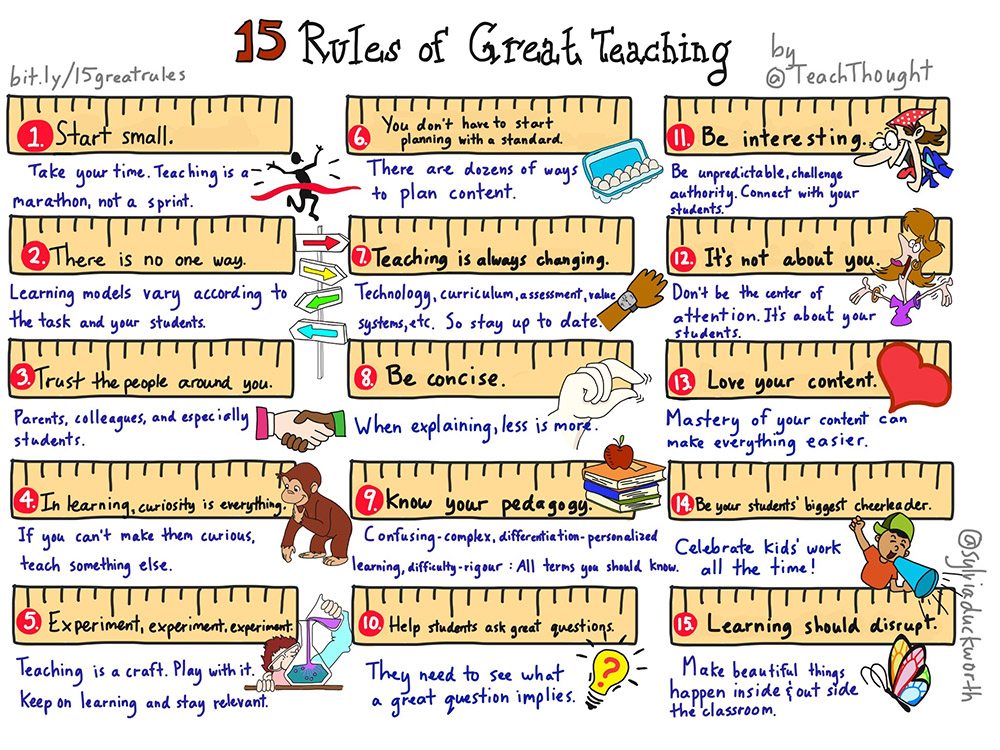
1. Start small.
2. Embrace that there is no one way.
3. Trust the people around you.
4. In learning, curiosity is everything.
5. Experiment. Experiment. Experiment.
6. Don’t always start planning with a standard.
7. Teaching is always changing.
8. Be concise.
9. Know your pedagogy.
10. Help students ask great questions.
11. Be interesting.
12. It’s not about you.
13. Love your content.
14. Be your students’ biggest cheerleader.
15. Know that learning should disrupt.
Tuesday, January 22, 2019
Professional Growth- How Self-Compassion Supports Academic Motivation and Emotional Wellness
 How Self-Compassion Supports Academic Motivation and Emotional Wellness
"Self-compassion is not dependent on external markers of success such as grades. “Self-compassion leads to learning goals instead of performance goals — such as trying again after messing up,” said Neff. “It’s a better academic motivator than self-criticism. It’s a motivation of care instead of a motivation of fear.”
Monday, January 14, 2019
Professional Growth - I notice… I wonder
Sometimes, the most effective teaching strategies are surprisingly simple. Here is an easy-to-implement strategy great for any subject, any grade level. Check out this 3 minute video:
https://www.edutopia.org/video/boosting-engagement-notices-and-wonders
When students make “I notice” and “I wonder” comments on course content, teachers can see what they know—and what they need to learn.
https://www.edutopia.org/video/boosting-engagement-notices-and-wonders
When students make “I notice” and “I wonder” comments on course content, teachers can see what they know—and what they need to learn.
Monday, January 7, 2019
Professional Growth - How We Can Help Our Students Remember Stuff
- Present information using a variety of formats and modalities
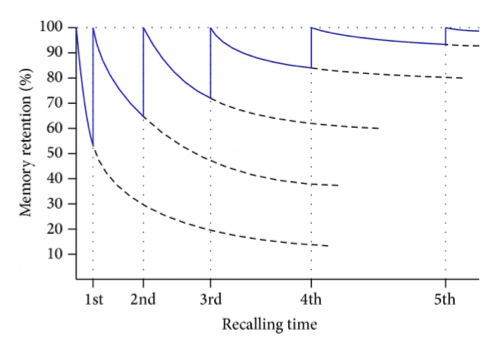
- Include four or five opportunities to review/revisit what they have learned before it is likely to be retained (Chun, & Heo, 2018).
- Students need opportunities to master concepts/skills and apply them in a variety of contexts.
- Students invest more effort in learning/review tasks when they understand the purpose for them.
- Teachers should visit with students about how the brain/memory works (to both store and retrieve information) and regularly model different strategies to enhance understanding, memory, and retention.
Monday, December 17, 2018
Professional Growth - Honors Isn’t About More

- HONOR THEIR INTELLIGENCE
- INQUIRY-BASED
- CONSTANT FEEDBACK
- MONITOR WORKLOAD
Monday, December 10, 2018
Professional Growth: How to drive student engagement while checking understanding
 Lee Watanabe-Crockett suggests that asking common questions in a slightly different way can yield better engagement and results.
How to drive student engagement while checking understanding
Tuesday, November 27, 2018
Professional Growth- A 4 Step Process for Building Resilience
A 4-Step Process for Building Student Resilience
A special education teacher has developed worksheets to help all students identify and manage their stressors.
Monday, November 12, 2018
Professional Growth - How do I know they know?
Professional Growth - How do I know they know?
Sometimes we believe that students know more than they are showing on a standard test. Why not use a conversation as a form of assessment?
This EduTopia Article by teacher/instructional coach Andrew Miller explores the notion of conversation for assessment.
Monday, November 5, 2018
Professional Growth - Demonstrations of Learning
Here’s a five minute video on how competency-based education personalizes how students show mastery by giving them choice in how they’re assessed.
Tuesday, October 30, 2018
Professional Growth- Power of Reflection
A well-known protocol can help student teams reflect intentionally on their work—a necessity for improvement and learning.
Monday, October 22, 2018
Professional Growth - The Social Classroom.
As you saw at Monday morning’s staff meeting, most Tiger teachers have committed to some form of increased student interaction for learning as a part of WICOR and 5 For All. Here is a quick (< 2 min) video from Edutopia to reinforce the importance - and engagement - that comes from student interaction.
https://www.edutopia.org/article/how-and-why-trauma-informed-teaching
https://www.edutopia.org/article/how-and-why-trauma-informed-teaching
Get to know their story...
Monday, October 15, 2018
Professional Growth - Finding Clarity in Assessment and Grading
 September ARTICLE in Edutopia. Shifts, trends, and philosophies in contemporary grading are examined and discussed.
"Grades are how we communicate to the outside world what a student knows and can do according to our standards and data collection systems. The problems here are myriad, as we know. Is a C (or an S) the same as “meets the standard,” or should that be an A or an E? Is a 70 percent a C, or should it be 75 percent? Do students automatically drop a letter grade for a certain number of absences? What about extra credit? Should we do a standards-based report card? What about those pesky zeros—do we use them, or is an F a 50 percent?"
Monday, October 8, 2018
Professional Growth - What and How Schools Teach
Picture a photograph of a school in 1920. Beneath sepia tones, individual desks faced front, in rows, with stacks of books casting shadows on solemn faces. Students prepared mainly for assembly-line jobs and were trained to follow routine tasks and comply in ways that made job performance efficient. Fast-forward. What makes the 2019–2020 school year different? LINK TO ARTICLE


Subscribe to:
Posts (Atom)